Project Estimating Tips for Contractors
Accurate estimating is the difference between a job that builds your business and a job that quietly drains your cash. The best contractors treat estimating as a repeatable system, not a last-minute guess.
When you consistently apply project estimating tips for contractors, you improve bid accuracy, reduce change-order fights, protect margins, and build a reputation for professionalism that brings referrals.
Estimating is also where many contractors unintentionally create risk. A missed line item, an unrealistic production rate, or a vague scope can turn a “good” contract into overtime, rework, and stress. The good news is that estimating is learnable.
With the right workflow, templates, and job-cost feedback loop, you can get much closer to predictable outcomes—whether you’re pricing remodels, commercial build-outs, service work, or specialty trades.
This guide lays out project estimating tips for contractors that are practical in the field. You’ll learn how to define scope clearly, measure quantities fast, price labor realistically, manage subcontractor bids, apply overhead and profit correctly, and build a defensible proposal that clients trust.
You’ll also see how modern estimating software, digital takeoffs, and historical cost data are changing the future of estimating—so you can stay competitive without racing to the bottom.
Why Estimating Accuracy Matters More Than “Winning the Bid”

Most contractors have experienced it: you win the job, then realize the budget is tight. That’s not success—it’s a warning sign. One of the most important project estimating tips for contractors is to reframe winning. Winning means “profitable and manageable,” not simply “lowest price.”
Estimating accuracy impacts nearly every part of operations. Your schedule is built on estimated production rates. Your cash flow depends on your pay application timing and material deposits. Your crew planning is tied to labor hours.
Even safety can be affected when crews rush to catch up on unrealistic estimates. When estimates are consistently off, the company starts living in reaction mode: scrambling for labor, renegotiating with suppliers, pushing change orders, and hoping the next job makes up for the last.
Accurate estimating also improves customer relationships. Clients feel safer when your numbers align with the scope and your proposal clearly explains inclusions and exclusions. That clarity reduces disputes and makes change orders feel fair.
Over time, accuracy becomes part of your brand—especially with repeat clients, property managers, and general contractors who value reliability.
Finally, accurate estimating protects your ability to grow. When estimates are tight and predictable, you can hire with confidence, invest in equipment, and take on larger projects without gambling your future.
That’s why the best project estimating tips for contractors focus on process, documentation, and feedback—not guesswork.
Build a Repeatable Estimating System Instead of Estimating “From Memory”
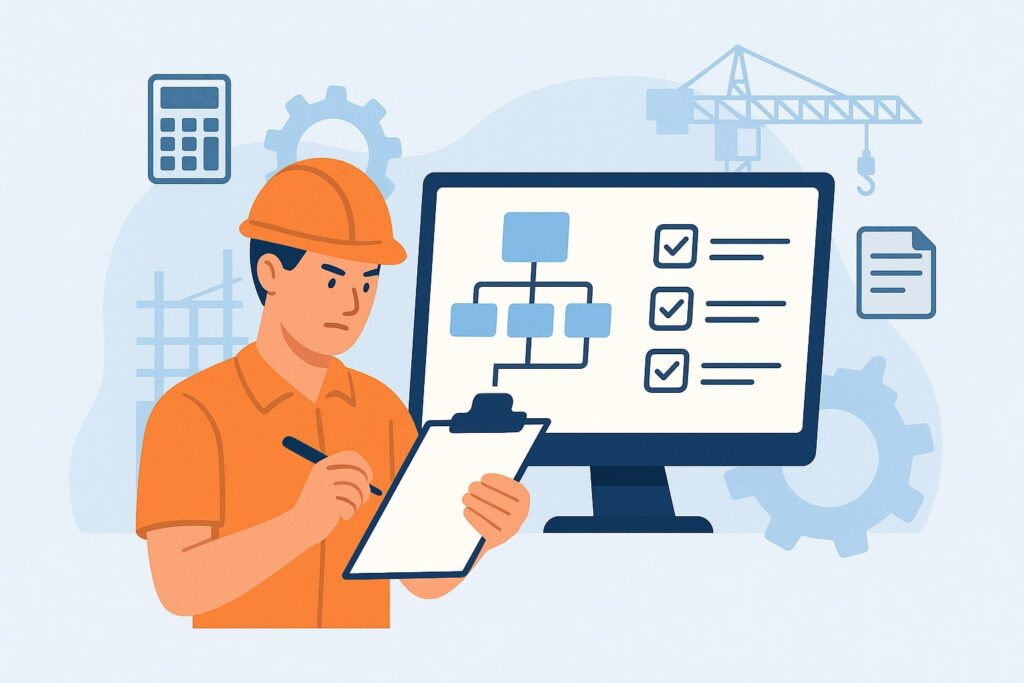
If your estimating depends on one person’s experience or mental math, it’s fragile. A key part of project estimating tips for contractors is creating a system that works even when you’re busy, short-staffed, or pricing multiple jobs at once.
A repeatable estimating system starts with standard steps. For example:
(1) intake and job walk,
(2) scope definition,
(3) takeoff and quantities,
(4) material pricing,
(5) labor hours and production rates,
(6) subcontractor coverage,
(7) equipment and rentals,
(8) overhead, profit, contingencies,
(9) proposal writing,
(10) internal review and submission.
When you estimate in the same sequence every time, you’re less likely to skip a cost category.
Standardization also means consistent templates. Use the same cost codes for every job. Use the same naming conventions for materials and assemblies. Use the same format for proposals so your team can compare estimates quickly.
Over time, standardized estimates produce better historical data—and that data becomes your biggest competitive advantage.
Your system should also include an estimating calendar. Rushed estimates create mistakes. One of the most overlooked project estimating tips for contractors is to estimate the time it deserves: schedule site visits, set deadlines for vendor quotes, and create a final “cooling off” review window before submission. Even 30 minutes of review can catch missed line items, wrong unit costs, or inconsistent scope notes.
Nail the Scope: Clear Scope = Strong Estimate
Estimating problems often start before numbers ever appear. If the scope is unclear, the estimate becomes a guess dressed up as a proposal. Among the best project estimating tips for contractors is to treat scope definition like a contract document—because it basically is.
Start with written scope notes that match how the job will be built. Break the work into phases: demo, framing, mechanical rough-in, finish work, cleanup. Identify what’s included, what’s excluded, and what assumptions you made.
Assumptions matter: “Existing subfloor is sound,” “Walls are plumb within tolerance,” “Electrical panel has capacity,” “Client provides fixtures,” “Working hours are normal business hours,” and so on. These statements protect you when the real job doesn’t match the assumed conditions.
Scope clarity also requires asking the right questions early. Who pulls permits? Who coordinates inspections? Who supplies dumpsters? Is there after-hours work? Is parking limited? Is the building occupied? Are there HOA rules? Are there lead/asbestos concerns? Each answer changes your estimate.
When you document scope properly, you reduce change-order friction. Clients don’t like surprises, but they accept changes when the original scope was clearly stated. That’s why scope discipline is central to project estimating tips for contractors—it makes your estimate defendable and your project smoother.
Do Quantity Takeoffs the Right Way (and Avoid Hidden Measurement Traps)

Quantity takeoffs are where many estimates gain or lose thousands of dollars. A strong takeoff is detailed, consistent, and double-checked. One of the most practical project estimating tips for contractors is to treat takeoff like a measurement audit: you are not just counting, you are verifying.
Start with the right base documents. Confirm you have the latest drawings, revisions, addenda, and specifications. If you’re estimating from incomplete plans, state that in writing and identify what’s missing.
Then break takeoff into categories: linear feet, square footage, counts, cubic yards, and assemblies. For example, drywall is square footage, baseboard is linear feet, doors are counts, concrete is cubic yards, insulation is square footage, and paint is often based on wall area with a factor for coats.
Hidden traps come from plan assumptions. Ceiling heights affect drywall and paint quantities. Waste factors vary by material (tile vs. carpet vs. siding).
Patterned materials need more waste. Old buildings often have out-of-square conditions that increase labor and waste. If the project has multiple levels, access and staging affect production. These are takeoff-related realities, not “extras.”
Digital takeoff tools can improve speed and accuracy, but they still require discipline. Use layers, naming standards, and saved measurement sets. Then spot-check the most expensive items.
A simple but powerful method from project estimating tips for contractors: perform a “sanity check” by comparing quantities to rough rules of thumb. If your drywall quantity seems low for the room count and layout, investigate before finalizing.
Price Materials Like a Pro: Quotes, Allowances, Lead Times, and Volatility
Material pricing is not just “unit cost × quantity.” Good material pricing considers market volatility, quote expiration, freight, tax, storage, and lead time risk. Many project estimating tips for contractors focus on materials because they’re visible, expensive, and often change between bid day and install day.
First, use vendor quotes whenever possible—especially for big-ticket items like lumber packages, windows, cabinets, HVAC equipment, and electrical gear. Make sure quotes include delivery fees, fuel surcharges, and any minimum order requirements.
Track quote validity dates. If your bid acceptance window is 30–60 days, your proposal should protect you with escalation language or updated pricing clauses when appropriate.
Second, treat allowances carefully. Allowances can help when selections aren’t finalized, but they also create conflict if they’re unrealistic.
A professional approach: state what the allowance includes (material only vs. material + labor), identify a realistic quality level, and show how adjustments will be handled. If clients want premium finishes, a low allowance is not “competitive”—it’s a future argument.
Third, include lead time risk. If a critical item takes 10–16 weeks, your schedule and overhead exposure changes. That’s why material planning is part of project estimating tips for contractors—you’re estimating time risk, not only cost.
Finally, consider waste, damage, and returns. Some products can’t be returned. Some require over-ordering. Include realistic waste factors and document them in your estimate notes.
Estimate Labor Using Production Rates, Not Hope
Labor is where profit is made or lost. Underestimating labor hours is the fastest path to blown budgets. One of the most important project estimating tips for contractors is to build labor estimates from production rates that match your real crews, not ideal conditions.
Start with a labor database that includes common tasks and historical hours: demo per square foot, framing per linear foot, drywall hanging per sheet, tile per square foot, painting per square foot with coat count, trim per linear foot, and so on.
Your numbers should reflect your crew’s skill level, tool quality, supervision, and typical jobsite conditions. A highly skilled crew in open new construction has different production than a crew working in an occupied remodel with daily cleanup and protection.
Then adjust for job complexity. Add labor factors for: tight access, high ceilings, multiple mobilizations, homeowner coordination, noise restrictions, protection of existing finishes, and inspection delays.
If the project is in a dense area with limited staging, material handling time increases. These “soft” factors are real labor costs that many estimates ignore.
Also separate burdened labor cost from hourly wage. Your true labor cost includes payroll taxes, workers’ comp, benefits, paid time off, and sometimes training. If you only price the wage, you are underbidding your true cost. That’s why serious project estimating tips for contractors always include burdened rates and supervision time.
Finally, add foreman and project management time appropriately. Even small jobs require coordination, ordering, scheduling, and punch list management. If you don’t price that time, you pay for it out of profit.
Subcontractor Bids: Compare Apples to Apples and Close Scope Gaps
Subcontractor pricing can make or break your estimate, especially for mechanical trades, roofing, specialty finishes, or site work. One of the most valuable project estimating tips for contractors is to create a “bid leveling” process so you know exactly what each subcontractor included.
Start by issuing clear scopes to subs. Provide drawings, site constraints, schedule expectations, warranty requirements, and a due date. Ask subs to list exclusions, assumptions, and alternates. If you just ask for a lump sum without scope clarity, you’ll get inconsistent bids that are hard to compare.
Then level the bids. Create a checklist: permits, inspections, mobilization, protection, patching, firestopping, disposal, start-up, balancing, and closeout documents. Some subs include these; others exclude them. Your job is to identify gaps before you sign a contract. If one bid is much lower, don’t automatically take it—ask what was excluded.
Also consider subcontractor risk: availability, schedule reliability, financial stability, and past performance. A slightly higher bid from a dependable sub can be cheaper than a low bid that causes delays and rework.
Finally, protect yourself in your prime contract: define who owns coordination conflicts, concealed conditions, and scope changes. This is why project estimating tips for contractors include subcontract management—because scope gaps are often discovered too late, when you have fewer options and more pressure.
Overhead and Profit: Stop Guessing and Start Pricing the Business You Want
Many contractors treat overhead and profit like an afterthought. That approach creates unpredictable income and limits growth. A core principle of project estimating tips for contractors is to price overhead and profit intentionally.
Overhead includes office rent, software, phones, insurance, vehicles, admin labor, estimating time, licenses, accounting, marketing, and leadership salaries. Some overhead is fixed; some scales with volume.
If you don’t recover overhead through projects, you’re relying on luck. A simple method: calculate annual overhead and divide by your target annual billings to estimate an overhead percentage. Then check whether your market can support that number and adjust your strategy accordingly.
Profit is not what’s left after mistakes. Profit is a line item you earn for risk, expertise, warranty exposure, and capital investment. Use a profit target that matches your risk profile and project type.
Higher-risk work (older buildings, unknown conditions, accelerated schedules) should carry higher profit. Low-risk, repeatable work can run on tighter margins if volume is consistent.
Also consider markup vs. margin. Many contractors confuse them. Markup is added to cost; margin is profit as a percentage of selling price. Your accounting and goals should be based on margin, because that’s what your financial statements show.
If you apply these project estimating tips for contractors, your estimates stop being “just bids” and start becoming a financial plan for a stable company.
Contingency, Escalation, and Risk Buffers: Protect the Estimate Without Overpricing
Risk is inevitable. The goal is not to eliminate risk; it’s to price it transparently and manage it. A practical set of project estimating tips for contractors involves adding the right buffers in the right way.
Contingency is a budget for unknowns within a defined scope. It can cover small quantity differences, minor plan inconsistencies, and normal job surprises. But contingency should not replace scope clarity. If your scope is vague, contingency turns into a hiding place for missing items—which still creates disputes later.
A smart way to handle contingency is to tie it to risk drivers: building age, accessibility, inspection complexity, unknown substrate conditions, and schedule constraints. Higher uncertainty = higher contingency. For projects with clear plans and predictable conditions, contingency can be smaller.
Escalation is different. Escalation covers market-driven price increases for materials and labor between bid date and purchase/installation.
If your lead times are long, escalation risk rises. Contractors increasingly use escalation clauses, re-quote policies, or material price locks with deposits. When done professionally, these protect both parties from unrealistic pricing.
You can also use allowances, alternates, and unit prices to manage uncertainty. Unit prices for unforeseen work (like additional drywall repair per square foot) reduce conflict and speed approvals.
These project estimating tips for contractors help you stay competitive while avoiding “silent losses” that come from unpriced risk.
Write a Proposal That Sells Value and Reduces Disputes
A clean estimate is only half the job. The proposal is how the client understands your offer—and how you protect yourself legally and operationally. One of the most profitable project estimating tips for contractors is to improve proposal quality.
A strong proposal includes: project summary, detailed scope, exclusions, allowances, schedule assumptions, payment terms, warranty, and change order process. Keep it readable. Use short paragraphs and bullet points. Clients often skim, so structure matters.
Explain what makes your number credible. Mention site protection, daily cleanup, licensed crews, code compliance, and communication processes. This is not fluff—these are real cost drivers. When you explain them, clients compare more than just price.
Also define how changes will be handled. State that changes require written approval, pricing, and schedule adjustments. Include a reasonable timeframe for proposal acceptance because pricing and scheduling change.
When clients understand the scope and process, they trust you more—even if you’re not the cheapest. That’s why proposal writing is a major part of project estimating tips for contractors: it directly affects close rate, profitability, and stress levels during construction.
Use Historical Job Cost Data to Calibrate Future Estimates
If you want consistently accurate estimates, you need feedback. Estimating without job-cost review is like driving with your eyes closed. One of the most important project estimating tips for contractors is to create a job-cost feedback loop.
Start by tracking costs using consistent cost codes. Labor should be tracked by task (demo, framing, finish). Materials should be matched to the estimated line items. Subcontractor invoices should be coded correctly. This takes discipline, but it pays back quickly.
After each job, compare estimated vs. actual costs. Identify the top variances and why they happened. Was labor slower because access was tight? Did you miss a disposal cost? Was the allowance too low? Did a subcontractor scope gap create rework? Write down the lessons in a short closeout note and update your estimating database.
Over time, you’ll develop accurate production rates for your team and region. You’ll also learn which project types are reliably profitable and which ones bring constant surprises. This insight helps you choose better work, improve pricing, and refine your bid strategy.
Contractors who apply these project estimating tips for contractors tend to grow faster because they stop repeating the same mistakes. They also gain confidence in their pricing, which makes sales conversations calmer and more professional.
Estimating Software and Digital Tools: What to Adopt (and What to Avoid)
Technology can improve speed and accuracy—but only if it supports your process. One of the smartest project estimating tips for contractors is to adopt tools that reduce errors, not tools that create extra work.
Digital takeoff software can speed up measurement and improve consistency. Estimating software can standardize templates, automate markups, and generate professional proposals. Job-costing and accounting integrations help your feedback loop. Scheduling tools improve planning and resource allocation.
But tools can also create problems if you rely on them blindly. For example, a prebuilt assembly might not match your real crew’s production rates. A material database might be outdated. A template might hide missing scope items. The tool is only as good as the assumptions behind it.
A practical approach: start with one improvement at a time. If takeoff is your bottleneck, adopt digital takeoff first. If proposal quality is weak, standardize proposal templates. If margin surprises are common, focus on job-cost tracking and variance review.
Also consider using a “standard checklist” inside your software: permits, disposal, protection, mobilization, supervision, warranty, closeout. Checklists are one of the most powerful project estimating tips for contractors because they prevent omissions—technology or not.
Advanced Estimating Strategies for Different Project Types
Not all projects should be estimated the same way. A remodel, a tenant improvement, and a service call each require different project estimating tips for contractors.
For remodels, hidden conditions are the biggest risk. Use stronger scope assumptions, higher contingency, and clearer change order language. Include protection, dust control, and daily cleanup. Expect slower production due to tight spaces and coordination with occupants.
For commercial interior build-outs, coordination and schedule are key. Include submittals, closeout documents, inspections, and after-hours work if required. Account for supervision time, safety requirements, and coordination meetings.
For service work, travel and mobilization costs matter. A common mistake is underpricing time spent driving, sourcing parts, and handling admin. Use service minimums, trip charges, and clearly defined hourly rates where appropriate.
For new construction, quantity accuracy matters more, but scope is often clearer. Focus on production rates, subcontractor coordination, and material lead times. Use alternates for upgrades and value engineering options.
When you tailor your process to project type, your estimates become more accurate and your proposals become more convincing. That’s why these project estimating tips for contractors emphasize context—because pricing should match the work reality.
Future Predictions: How Estimating Will Change Over the Next Few Years
Estimating is evolving. Contractors who adapt will protect margins while others compete on price alone. A forward-looking set of project estimating tips for contractors includes preparing for faster bid cycles, higher client expectations, and more data-driven decision making.
First, clients increasingly expect faster turnaround and clearer proposals. That pushes contractors toward standardized templates, digital takeoffs, and better internal workflows.
Second, cost volatility and lead times continue to influence how contractors write contracts, especially around allowances, escalation clauses, and procurement planning. Third, data will become the advantage: companies that track job-cost details will price more accurately than competitors who rely on memory.
We’ll also see more assembly-based estimating, where contractors price using packages (for example, “bathroom renovation – mid-level finish”) built from historical costs. This can speed up early budgeting while still allowing detailed refinement later.
Additionally, collaboration between estimating and project management will tighten—because the estimate is increasingly treated as the operational plan, not just a bid.
Another likely trend is greater use of visual documentation: annotated plans, takeoff snapshots, and scope diagrams included with proposals. This reduces misunderstandings and supports change order discussions.
These predictions don’t replace fundamentals. They reinforce the same truth: the contractors who master project estimating tips for contractors—scope clarity, realistic labor, disciplined pricing, and job-cost feedback—will stay profitable in any market.
FAQs
Q.1: What is the most common estimating mistake contractors make?
Answer: One of the most common mistakes is underestimating labor hours. Many contractors price labor based on how fast they want the job to go instead of how jobs usually go in real conditions.
Another frequent mistake is incomplete scope: missing protection, disposal, mobilization, supervision, permits, or patch/repair work that is implied but not listed. A reliable fix is to follow a checklist and apply project estimating tips for contractors that require scope notes, production rates, and a final estimate review.
Q.2: How do I know if my overhead and profit are priced correctly?
Answer: You know your overhead and profit are priced correctly when your financial statements consistently show healthy net profit after paying owners a reasonable salary and covering all operating expenses.
Calculate annual overhead and compare it to annual revenue to estimate an overhead percentage. Then set profit targets based on risk and market position. One of the most valuable project estimating tips for contractors is to stop using a random markup and instead price your business model intentionally.
Q.3: Should I include contingency in every estimate?
Answer: In most cases, yes—but the amount should match uncertainty. Projects with older buildings, unclear plans, or tight access should carry more contingency. Clear, repeatable work can use less.
Contingency should not hide missing scope; it should cover reasonable unknowns. Many project estimating tips for contractors recommend documenting contingency assumptions so clients understand what it is and how it’s used.
Q.4: How do I handle material price increases after I submit a bid?
Answer: Use clear bid validity periods, vendor quote expiration dates, and escalation language when appropriate. For long lead items, consider deposits to lock pricing or plan for re-quoting before ordering.
You can also structure allowances and alternates to manage selection uncertainty. The best project estimating tips for contractors treat procurement strategy as part of estimating, not a separate issue.
Q.5: What’s the best way to improve estimating accuracy quickly?
Answer: Start with a post-job review process. Compare estimated vs. actual costs on every job, even small ones. Track the biggest variances and update your production rates and templates. Also introduce an estimating checklist so you stop missing repeat items like disposal, protection, permits, and supervision.
These are foundational project estimating tips for contractors because they create immediate improvements without requiring massive changes.
Q.6: Is estimating software worth it for small contractors?
Answer: It can be, but only if it solves a real problem. If you struggle with takeoffs, digital takeoff tools can save time. If your proposals are inconsistent, estimating software can standardize them. If your margins are unpredictable, job-costing integration can help.
The smartest project estimating tips for contractors recommend adopting tools gradually and validating them against real job results.
Conclusion
Estimating doesn’t have to be stressful, rushed, or guess-based. When you apply disciplined project estimating tips for contractors, your bids become more accurate, your projects run smoother, and your profit becomes more predictable.
The core pillars are simple but powerful: define scope clearly, measure quantities carefully, price materials with real quotes and realistic allowances, estimate labor using proven production rates, level subcontractor bids to close scope gaps, and apply overhead and profit intentionally.
The contractors who win long-term are not the ones who underbid and hope. They are the ones who build a repeatable estimating system and improve it with job-cost feedback.
They write proposals that explain value, protect against misunderstandings, and set expectations upfront. They also adapt to the future—using digital tools and data to estimate faster without sacrificing accuracy.
If you treat estimating as a craft and a process, not a chore, you’ll win better jobs, reduce disputes, and build a business that stays strong through changing markets.
Keep refining your templates, tracking your numbers, and applying these project estimating tips for contractors consistently—because consistency is what turns good estimating into dependable profit.