Job Costing 101: How Contractors Can Track Profit
Job costing is the difference between “I think this job is making money” and “I can prove this job is profitable, right now.” For contractors, profit isn’t just about winning work.
Profit comes from controlling labor, materials, equipment, and subcontractors—while billing correctly, managing cash flow, and spotting surprises early. That’s why job costing matters on every single project, from a one-day service call to a 12-month build.
At its core, job costing is the system you use to assign every cost and every dollar of revenue to a specific job, phase, and cost code.
When job costing is done well, you can see which crews are efficient, which estimators are accurate, which job types are risky, and which customers pay the fastest. You also gain the confidence to raise prices, negotiate change orders, and stop repeating the same mistakes.
This guide breaks down how contractors can set up job costing, track it weekly, and use it to protect margin. You’ll learn how to build a clean cost code structure, capture labor and material costs in real time, forecast profit using percent-complete, and turn job costing reports into practical decisions.
You’ll also find common pitfalls that silently destroy profitability—and a workflow that keeps job costing accurate without drowning your team in admin work.
What Job Costing Really Means (and Why It’s Not Just Bookkeeping)

Job costing is the practice of tracking all job-related costs and matching them to the revenue earned on that job. Sounds simple. But in contracting, costs hit at different times, invoices arrive late, change orders happen midstream, and labor productivity shifts daily.
That’s why job costing is not the same as basic bookkeeping. Bookkeeping records what happened. Job costing tells you what it means for profit—and what will happen next if nothing changes.
Good job costing connects field operations to financial results. Every purchase order, vendor bill, timecard, equipment charge, and subcontractor invoice becomes a job costing entry tied to a specific job, phase, and cost code. Without this structure, your numbers may look fine in the bank account while jobs quietly bleed margin.
Job costing also helps you answer business-critical questions fast. Are you over budget on rough-in labor? Is that project actually profitable after warranty and punch work? Did the estimator miss a scope item? Is the crew underperforming because of plan issues or site constraints? When job costing is updated weekly, you can act before a small problem becomes a full job loss.
Finally, job costing supports stronger billing and cash management. Contractors often use work-in-progress (WIP) reporting to understand overbilling or underbilling, which can dramatically affect cash flow and risk.
WIP schedules are widely recognized as a core tool for construction accounting because they show how costs and billings compare to earned revenue.
The Core Components of a Job Costing System
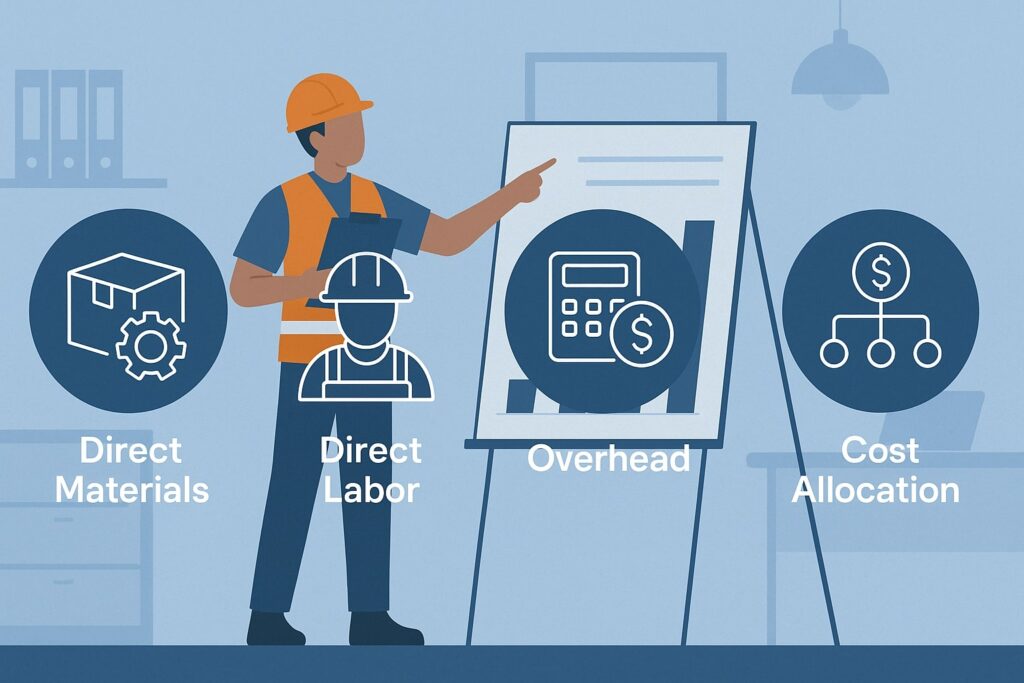
A reliable job costing system has a few non-negotiable building blocks. If any one is missing, job costing becomes slow, inconsistent, and easy to ignore. The goal is a job costing process that runs smoothly even when the schedule is hectic.
First, you need job setup standards. That means every job has a job number, customer name, contract amount, start date, and expected completion date. Then you break the job into phases (like demo, framing, mechanical, finish) and cost codes (like labor, materials, subs, equipment). This is the map that job costing follows.
Second, you need consistent cost capture. Labor time must be coded correctly. Materials must be assigned to the job. Subs must bill against the right phase. Equipment and fuel need a method too. Job costing fails when costs sit in “misc” or “uncategorized” accounts. A system is only as accurate as the coding discipline.
Third, you need a budget baseline. Job costing compares actual costs to the original estimate (and revised estimate). If you don’t load budgets by phase and cost code, job costing can’t identify where the job is drifting. A lump-sum job budget is a weak foundation for job costing.
Fourth, you need earned revenue logic. Contractors frequently track profit using percent-complete and WIP reporting to see whether a job is overbilled or underbilled—an essential view for managing cash and credibility with banks and bonding relationships.
Building a Cost Code Structure That Makes Job Costing Easy
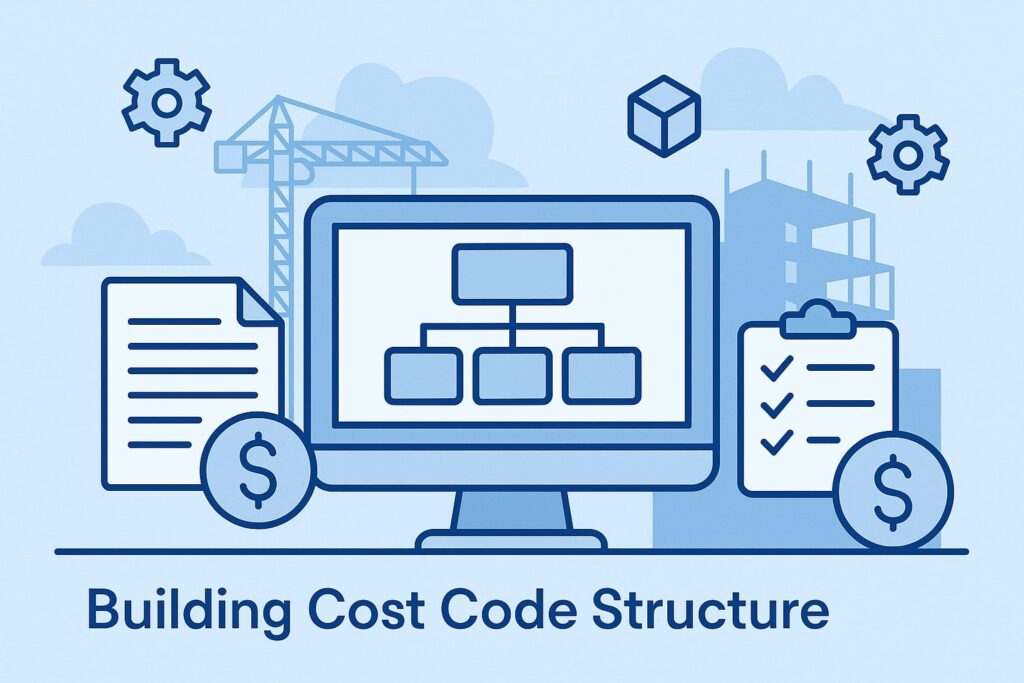
Cost codes are the language of job costing. When cost codes are too detailed, people code incorrectly or give up. When cost codes are too broad, job costing can’t tell you what’s wrong. The best cost code structure balances clarity and simplicity.
Start with phases that match how your jobs are managed in the field. If your superintendent thinks in terms of “sitework → slab → framing → MEP rough → insulation → drywall → trim → punch,” then your job costing phases should follow that rhythm. Job costing works best when the field can recognize the categories instantly.
Then decide what you want to learn from job costing. If you want to track labor productivity by trade, create labor cost codes per phase. If you want to track material overages, separate materials by phase.
If you want to evaluate subcontractor performance, create sub cost codes tied to each phase. The key is repeatability: job costing categories should be consistent across jobs so you can compare performance over time.
Avoid these common cost code mistakes:
- Too many one-off codes that only apply to one job.
- Mixing phases and cost types (e.g., “Framing Labor & Materials” combined).
- Allowing “Other” or “Misc” to become the largest bucket.
A strong job costing structure also supports clean change order tracking. If a change order adds scope, you should add budget and track costs in the same job costing codes used for base scope. That makes profitability visible without spreadsheet gymnastics.
Estimating vs. Job Costing: How Budgets Become Profit Controls
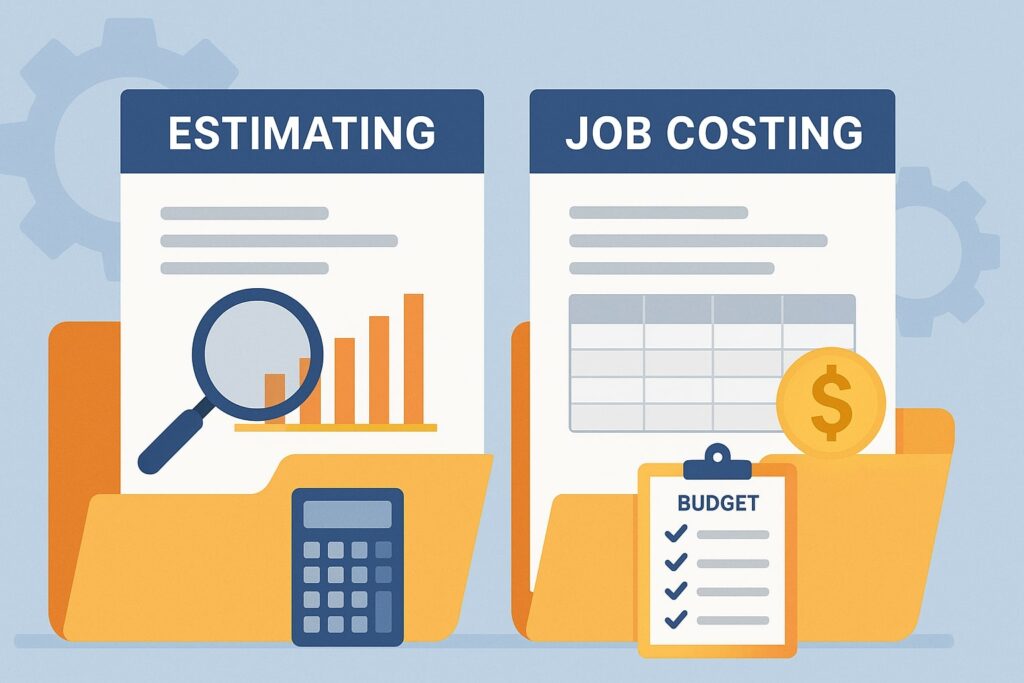
Estimating wins jobs. Job costing makes money on jobs. If estimating and job costing don’t connect, your budget is just a pre-construction guess with no operational power.
The first step is to convert your estimate into a job costing budget at the same level of detail you’ll use for tracking. If you estimate framing labor at $42,000, don’t load a single “Labor” budget for $42,000.
Break it into framing labor, blocking labor, punch labor, or whichever phases reflect how your crew works. Job costing needs a baseline that matches reality.
Next, set rules for budget revisions. In job costing, there are two truths: the original budget (what you thought) and the revised budget (what you now believe). Your job costing system should preserve both. Why? Because original vs. actual tells you estimating accuracy, while revised vs. actual tells you whether the job is currently controlled.
Then build “early warning” thresholds. Job costing is most valuable when it triggers action. Examples:
- If a cost code hits 70% of the budget at 40% job completion, it’s a flag.
- If labor hours are 15% above plan by week two, review production.
- If material costs spike before installation starts, verify deliveries and theft risk.
When you treat job costing as a control system—not an after-the-fact report—you turn profit into a process.
Capturing Labor Correctly: The #1 Driver of Job Costing Accuracy
Labor is often the largest variable cost and the most common reason job costing goes off the rails. That’s because labor is messy: travel time, rework, standby time, supervision, and split days across multiple jobs. If labor coding is sloppy, job costing will lie to you.
Start with time entry rules that your crew can follow. Keep it simple: every timecard should include job, phase/cost code, hours, and (optionally) task notes.
If a worker touches two jobs in one day, split the time. If a worker is doing shop prep for a specific job, code it to that job. If the work is truly overhead (training, company meetings), don’t force it into job costing.
Next, track labor hours—not just labor dollars. Job costing based on dollars alone hides wage differences. If one crew uses too many hours, job costing must show that clearly. Hours also allow productivity metrics like:
- Estimated hours vs. actual hours
- Units installed per labor hour
- Labor cost per square foot (where relevant)
Finally, job costing improves when foremen review labor weekly. A 10-minute weekly check catches coding errors early, before payroll locks and the job costing report becomes a clean-looking disaster.
Tracking Materials and Vendors Without Losing Your Mind
Material costs can destroy job costing through three quiet problems: mis-coded bills, delayed invoices, and unapproved purchasing. A strong job costing workflow keeps materials tied to the job from the moment you commit to the spend.
Start with purchase orders (POs) or at least a “committed cost” method. Job costing isn’t only about what you’ve spent—it’s also about what you’ve agreed to spend. When you track commitments, job costing becomes predictive. If your drywall package is committed at $68,000, you’ll see margin pressure before all invoices arrive.
Second, require job coding at the point of purchase. If your team uses cards at suppliers, set a rule: every receipt needs a job and cost code. If you allow “we’ll code it later,” job costing becomes a back-office guessing game.
Third, match vendor bills to deliveries and scope. If material arrives early, job costing will show costs before progress. That’s not wrong—but it can confuse the team. The fix is communication: job costing reports should reflect both cost-to-date and percent complete, so the story makes sense.
Lastly, separate materials from labor in your job costing codes. When they’re combined, you can’t tell if overruns come from waste, price increases, theft, or installation inefficiency.
Subcontractors, Equipment, and “Hidden” Costs That Break Job Costing
Many contractors think job costing is mostly labor and materials. Then they wonder why the job is losing money even though “labor looks fine.” The truth is that subcontractors, equipment, permits, rentals, and small tools can quietly erase profit.
For subcontractors, job costing improves when you track three numbers:
- Original subcontract amount (budget)
- Approved changes (revised budget)
- Remaining commitment (open PO/subcontract balance)
This prevents the classic problem where subs submit change order invoices late, and job costing shows a profit that disappears at closeout.
For equipment, you need a policy. Even if you own equipment, it still has a job cost. Many contractors use internal equipment rates (hourly or daily) for job costing. This creates two benefits: it reveals equipment-heavy jobs that need higher pricing, and it prevents overhead from silently absorbing equipment wear.
Don’t forget “soft” job costs like permits, inspections, dumpsters, temp utilities, and mobilization. If these are coded to overhead, job costing will make jobs look better than they are—until the year-end numbers tell the truth.
A clean job costing system shines a light on total job cost, not just the obvious line items.
Job Costing Reports Contractors Actually Use (Not Just Accountants)
Job costing fails when reports are too slow, too complex, or too disconnected from the field. The best job costing reports are simple, consistent, and reviewed on a schedule.
The foundational report is the Job Cost Detail: costs by job, phase, and cost code compared to budget. This is where you see overruns and under-runs. But by itself, it’s incomplete because it doesn’t show where the job is headed.
That’s where Job Cost Forecasting comes in. A forecast adds a “cost to complete” estimate for each cost code. Job costing becomes forward-looking: you’re not only tracking what you spent, you’re predicting the final cost.
Next is the WIP report (Work in Progress). WIP ties job costing to revenue recognition and billing status, often using percent complete to estimate earned revenue and compare it to billings. This helps you spot overbilling and underbilling—critical for cash flow and risk management.
Finally, use a simple Project Health Snapshot for weekly meetings:
- Contract amount and approved changes
- Revised gross profit forecast
- Top 3 cost code variances
- AR status (what’s billed, what’s collected, what’s stuck)
If job costing reports don’t lead to decisions, they’re just paperwork.
WIP and Percent-Complete: Turning Job Costing Into Real Profit Visibility
Job costing shows costs. Profit tracking requires earned revenue logic, especially on long-duration projects. This is where percent-complete and WIP reporting matter.
Percent-complete typically uses costs incurred divided by total estimated costs to estimate completion percentage. Then you apply that percent to contract value to estimate earned revenue.
When you compare earned revenue to billings, you see whether the job is overbilled or underbilled. That gap affects cash flow, financial statements, and how “healthy” the business looks.
This concept is widely used in construction accounting because it reveals problems that pure cash accounting hides. A contractor can be cash-positive (because they billed ahead) while the job is actually losing money.
Or they can be cash-negative (because they underbilled) even though the job is profitable. WIP helps clarify what’s really happening.
Revenue recognition rules can be complex depending on contract structure, change orders, and whether performance obligations are satisfied over time or at a point in time. Guidance under ASC 606 has influenced how many contractors document and support their revenue recognition approach.
Even if you’re not preparing formal financial statements, the operational takeaway is simple: job costing plus percent-complete gives you a more honest profit forecast than checking the bank balance.
Change Orders and Scope Creep: Protecting Job Costing From “Phantom Profit”
Change orders are where contractors either protect profit or donate it. Many job costing systems fail because change orders are handled informally in the field and formally in accounting weeks later—if ever. That timing gap causes “phantom profit,” where job costing reports look strong until late invoices hit.
The fix is to make change orders a job costing workflow, not a paperwork event. When scope changes, do three things fast:
- Create a change order log entry (even if it’s pending).
- Add a budget line in job costing for the change (labor, materials, subs).
- Track costs to that change budget immediately.
This keeps the job costing honest. If the change order is not approved yet, you still track costs—because the money is leaving your business regardless of paperwork status. The job costing report will then show the true risk exposure.
Also separate “owner change orders” from “internal change orders.” Owner change orders are billable. Internal change orders come from estimating misses, design issues, or site surprises. Job costing should label them clearly so you learn from them.
Under ASC 606, contract modifications and variable consideration can affect revenue recognition and documentation expectations, which is another reason clean change order tracking matters.
Job Costing Workflow: A Weekly Rhythm That Keeps Profit Under Control
The best job costing system is boring because it’s consistent. Contractors who win with job costing don’t rely on heroics. They follow a weekly rhythm.
Here’s a practical weekly job costing cadence:
- Daily/ongoing: Code labor to job and cost code. Capture receipts with job tags.
- Weekly (Operations): Foreman/superintendent reviews labor distribution and top cost codes.
- Weekly (Accounting): Enter vendor bills, allocate costs, update committed costs, and flag uncoded items.
- Weekly (PM + Accounting): Update cost-to-complete forecasts by cost code.
- Weekly (Leadership): Review job costing dashboard: margin forecast, WIP, cash risks, and change order status.
This weekly loop turns job costing into early detection. A job rarely “suddenly” loses money. It leaks money for weeks—through productivity drift, small unbilled extras, material waste, and delayed change approvals. Weekly job costing makes those leaks visible.
To keep job costing from becoming burdensome, standardize:
- Cost code lists
- Vendor coding rules
- A “no uncoded costs” policy
- Approval steps for purchase commitments
When job costing is updated weekly, you can make small corrections instead of expensive recoveries.
Common Job Costing Mistakes (and How to Fix Them Fast)
Contractors often say job costing “doesn’t work,” but usually the issue is a process gap. These are the most common job costing failures—and fixes that actually stick.
- Mistake 1: Waiting until month-end: Month-end job costing is too late. The fix is weekly updates and a short weekly review meeting.
- Mistake 2: Coding everything after the fact: Back-coding costs leads to errors. The fix is coding at the source: time entry and purchasing.
- Mistake 3: No committed cost tracking: Job costing without commitments underestimates future cost. Track open POs, subcontracts, and expected invoices.
- Mistake 4: Mixing overhead with job cost: If permits and dumpsters go to overhead, job costing inflates job profit. Define job cost rules and audit them quarterly.
- Mistake 5: Not forecasting cost to complete: A budget vs. actual report is not enough. Job costing must include a forecast so you see the final margin before it’s too late.
- Mistake 6: “Misc” cost codes everywhere: Misc kills learning. Limit misc usage and require notes when it’s used.
Fixing job costing is rarely about buying a new tool. It’s about tightening the workflow so job costing reflects reality.
Technology Trends: The Future of Job Costing for Contractors
Job costing is becoming faster and more predictive because of automation, integrations, and better field adoption. The direction is clear: job costing is moving from “accounting reporting” to “real-time operational control.”
One trend is real-time cost capture. Receipt capture, card feeds, and automated coding suggestions reduce lag. As costs hit the system faster, job costing becomes more useful for weekly decisions.
Another trend is deeper integration between project management, time tracking, and accounting. When change orders, RFIs, POs, and timecards live in connected workflows, job costing becomes less dependent on manual cleanup.
AI is also starting to influence job costing through anomaly detection and forecasting. Expect more systems to flag unusual cost patterns (like labor spikes, duplicate invoices, or material price jumps) and to recommend forecast updates based on historical job performance.
On the financial side, contractors are paying closer attention to WIP discipline and documentation, especially when lenders, bonding, or financial reporting expectations require confidence in percent-complete calculations and revenue recognition support.
The future of job costing is simpler reporting, fewer manual steps, and earlier warning signals—so contractors can protect profit before it disappears.
Tax and Cash Planning: How Job Costing Supports Smarter Decisions
Job costing isn’t tax advice, but it strongly influences tax and cash decisions because it clarifies what you truly earned and what you can afford. When job costing is accurate, you can plan equipment purchases, staffing, and financing based on real margins—not guesses.
For example, equipment strategy improves when job costing shows which job types consume equipment hours and which jobs can support higher pricing.
If you plan to invest in equipment, tax rules like Section 179 and depreciation timing can matter. The IRS’s depreciation guidance for 2025 includes Section 179 limits and phase-out thresholds, which can impact cash planning around major purchases.
Job costing also supports cleaner billing practices. If WIP shows consistent underbilling, you may be funding projects with your own cash—creating unnecessary stress even on profitable work. If WIP shows chronic overbilling, you may face tougher conversations later when jobs slow down and billings must match earned revenue.
Finally, job costing helps you decide when to walk away. If job costing reveals certain job types repeatedly underperform due to customer behavior, site conditions, or schedule pressure, you can either reprice those jobs or stop bidding them. That is one of the highest-impact uses of job costing.
FAQs
Q.1: What is job costing for contractors?
Answer: Job costing is a method of tracking all costs and revenue for each job so you can measure profitability accurately. In practice, job costing assigns labor, materials, subcontractors, equipment, and other expenses to a job, broken down by phases and cost codes.
This allows contractors to compare actual results to the budget and forecast the final margin before the job ends. Job costing is most effective when it is updated weekly, not just at month-end.
Q.2: How often should job costing be updated?
Answer: Weekly job costing is the standard for contractors who want real control over profit. Daily cost capture (time and purchasing) combined with weekly review meetings gives you early warnings.
Month-end job costing is better than nothing, but it usually arrives after the job has already drifted. Weekly job costing also makes WIP reporting more accurate because percent-complete depends on timely cost data.
Q.3: What’s the difference between job costing and WIP?
Answer: Job costing tracks actual and committed costs against a job budget. WIP (Work in Progress) ties job costing to earned revenue and billing status.
A WIP schedule can show whether you are overbilled or underbilled compared to earned revenue, which affects cash flow and risk visibility. WIP is widely treated as a key construction accounting tool because it connects job progress to financial outcomes.
Q.4: What cost codes should I use for job costing?
Answer: Use cost codes that match how you manage work and how you want to learn from your results. Typical job costing structures include phases (sitework, concrete, framing, MEP rough, finishes) and cost types (labor, materials, subs, equipment).
Avoid too many one-off codes and limit “misc” usage. The best job costing codes are consistent across projects so you can compare performance over time.
Q.5: Why does my job costing show profit but I still feel broke?
Answer: That usually points to cash flow timing, underbilling, slow collections, or heavy upfront costs. Job costing can show you the margin, but WIP can show whether you billed enough for the work completed.
If you are consistently underbilled, you may be financing projects yourself. If you are overbilled, you may look cash-strong now but face pressure later when billings slow.
Q.6: How do I handle change orders in job costing?
Answer: Treat change orders as a job costing process, not just paperwork. Log the change immediately, add budget for it, and code costs to it right away—even if approval is pending.
This prevents “phantom profit,” where job costing looks good until late invoices arrive. Consistent documentation also supports stronger revenue recognition practices under ASC 606 for contractors that follow those standards.
Conclusion
Contractors don’t lose profit in one big moment. They lose it in small leaks—uncoded costs, drifting labor productivity, late change orders, untracked commitments, and billing that doesn’t match progress. Job costing turns those leaks into visible signals.
When job costing is built on a clean cost code structure, accurate labor tracking, disciplined purchasing, and weekly forecasting, it becomes a control system for profit—not a spreadsheet chore.
The contractors who grow sustainably are the ones who treat job costing as a weekly habit. They review job costing while there’s still time to adjust the plan, not after the job is closed. They use job costing and WIP to understand what’s earned, what’s billed, and what’s at risk.
As tools become more integrated and automation improves, job costing will continue shifting toward real-time insight and predictive forecasting. But the winning formula won’t change: consistent coding, frequent reviews, and leadership that uses job costing to make decisions.
If you commit to that rhythm, job costing becomes one of the most powerful ways to protect margin, price work confidently, and build a business that stays profitable on purpose.