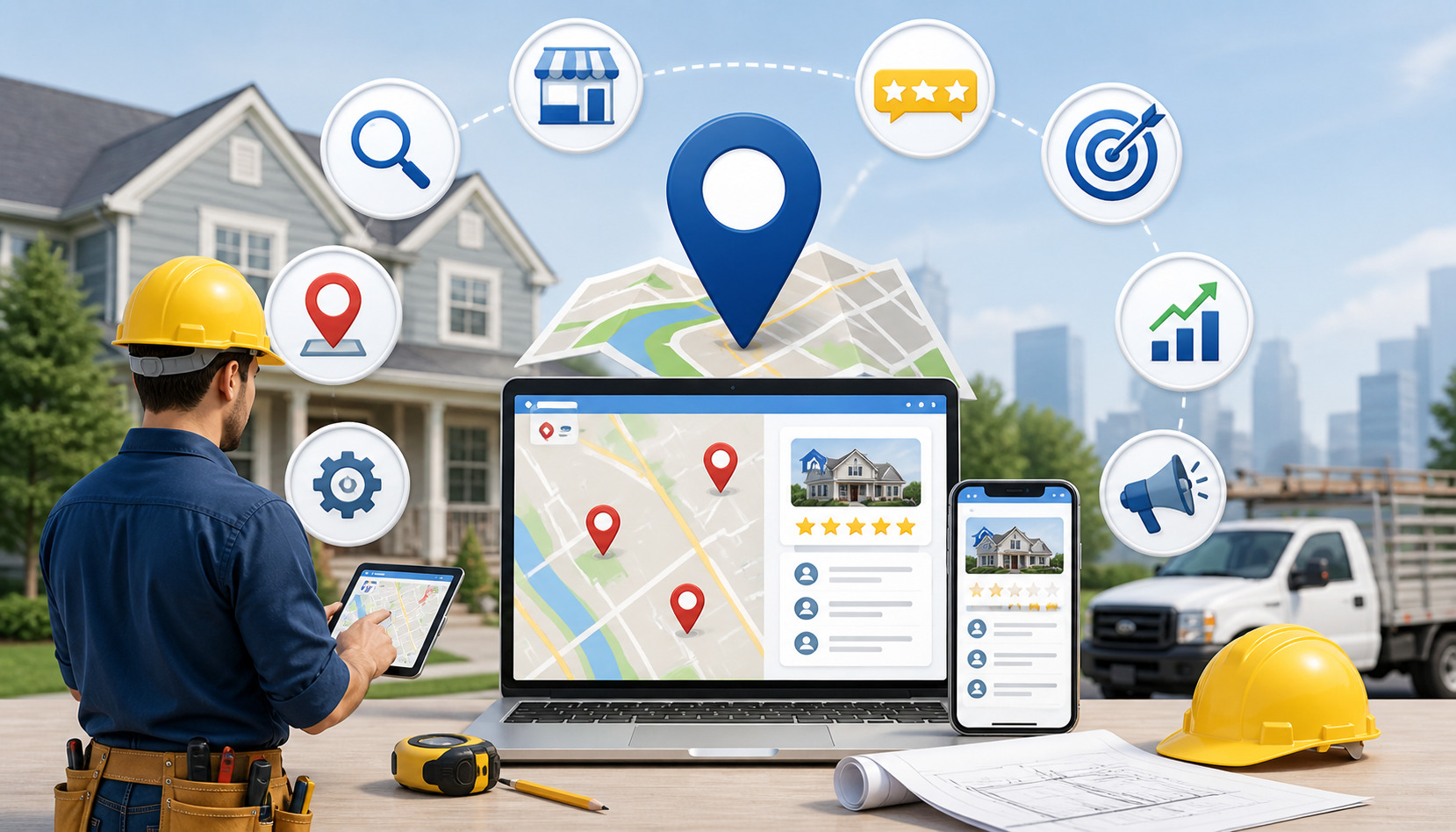
Local SEO Strategies for Contractors
Local SEO Strategies for Contractors help builders, remodelers, roofers, electricians, plumbers, landscapers, painters, HVAC teams, and other trade professionals get found when nearby customers are ready to hire.
Most people no longer start by asking a neighbor for one name. They search online for services, compare map listings, read reviews, look at photos, check websites, and then call the contractor who looks credible, available, and relevant to the job.
Strong local SEO helps your business appear in local search results, map listings, and service-related searches when customers are actively looking for help. Done well, it can increase calls, quote requests, booked appointments, and repeat visibility in the areas you serve.
Local SEO is not just about ranking higher. It is about proving that your contracting business is real, trustworthy, nearby, experienced, and ready to solve the customer’s problem.
What Is Local SEO for Contractors?
Local SEO for contractors is the process of improving your online presence so your business appears when people search for nearby contracting services. These searches often include terms such as “roof repair near me,” “bathroom remodeler in my area,” “licensed electrician nearby,” or “deck builder close to me.”
Search engines use local signals to decide which businesses to show. These signals include your location, service area, Google Business Profile, reviews, website content, local citations, photos, business categories, and how consistent your information is across the web.
For contractors, local SEO matters because customers usually need someone who serves their area. A homeowner searching for a kitchen remodeler does not want a company three regions away. A property manager looking for emergency plumbing wants a business that can respond quickly.
Local search for contractors typically appears in three major places:
- Map results
- Organic website results
- Local service or business listings
Your goal is to build enough relevance, trust, and authority that search engines confidently connect your business with the right local searches.
Local SEO is also different from broad SEO. A national blog might target general topics, but contractor website SEO should focus on service areas, specific trades, project types, customer questions, and proof of real work.
Why Local SEO Matters for Construction Businesses

Local SEO for construction business growth is important because contracting is highly competitive. Even if you do excellent work, customers may never find you if your competitors appear first in local search results.
Many customers compare several contractors before making a decision. They look at star ratings, review count, photos, services, response speed, website quality, and whether the business looks active. If your online presence is weak, outdated, or inconsistent, you may lose the lead before the customer ever calls.
Good contractor local SEO strategies help you show up at the exact moment someone is ready to take action. That is what makes local SEO so valuable. It captures demand that already exists.
For example, someone searching for “foundation repair contractor” is likely much closer to hiring than someone casually browsing home improvement ideas. If your business appears with strong reviews, helpful content, and clear service details, you have a better chance of earning that inquiry.
Local SEO also builds trust. A complete Google Business Profile, consistent business information, detailed service pages, project photos, and helpful website content all tell customers that your business is established and reliable.
Contractor lead generation becomes more efficient when local SEO is working because you are not relying only on referrals, ads, or cold outreach. Your online presence becomes a long-term asset that can keep bringing in qualified leads.
For broader growth ideas, this guide on getting more contractor leads can support your local SEO planning.
Key Ranking Factors in Local SEO

Search engines consider many signals when deciding which contractors appear in local results. Some are tied to your Google Business Profile. Others come from your website, reviews, citations, backlinks, and user behavior.
The most important local SEO signals usually fall into three categories: relevance, distance, and prominence. Relevance means your business matches the service being searched. Distance means your business serves the searcher’s area. Prominence means your business appears trustworthy, established, and credible online.
For contractors, this means your website and listings should clearly explain what you do, where you work, and why customers can trust you. Vague service descriptions are not enough. A remodeling contractor should list specific services such as kitchen remodeling, bathroom remodeling, basement finishing, additions, and exterior renovations.
Here is a practical breakdown:
| Factor | What It Means | Why It Matters |
| Google Business Profile | Your official business listing in Google Search and Maps | Helps customers find your services, hours, photos, reviews, and contact details |
| Reviews and Ratings | Customer feedback across Google and other platforms | Builds trust and can influence clicks, calls, and rankings |
| Local Keywords | Service and location terms used naturally on your site | Helps search engines connect your business to relevant searches |
| Website Quality | Fast, mobile-friendly, useful, organized pages | Improves user experience and supports organic rankings |
| Local Citations | Mentions of your business name, address, and phone number | Reinforces credibility and consistency |
| Backlinks | Links from other relevant websites | Signals authority and local reputation |
| Photos and Project Proof | Real images of completed work | Helps customers evaluate your experience |
| Content Depth | Helpful pages, FAQs, guides, and project examples | Shows expertise and answers customer questions |
Ranking is not based on one action. It comes from many consistent signals working together.
Google Business Profile Optimization
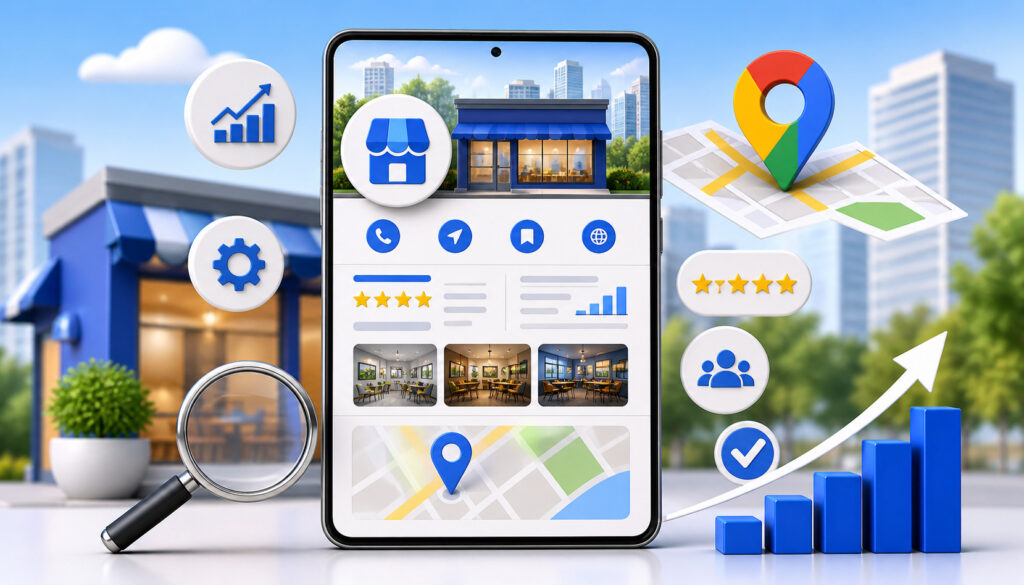
Google Business Profile optimization is one of the most important contractor Google ranking tasks. Your profile can appear in map results, branded searches, and service-based searches.
Start by making sure your business name, phone number, website, service areas, hours, and categories are accurate. Choose the most specific primary category available for your trade. Then add secondary categories that describe related services.
Your services section should be detailed. Instead of listing only “contractor,” include specific services such as deck construction, siding repair, bathroom remodeling, concrete work, drywall installation, electrical repairs, or commercial buildouts.
Photos matter too. Add real images of completed projects, crews at work, vehicles, equipment, before-and-after results, and jobsite details. Avoid relying only on stock images because customers want proof of real experience.
Use posts and updates when you have seasonal services, completed projects, safety reminders, or helpful maintenance tips. An active profile signals that your business is current.
Reviews and Ratings
Reviews are one of the strongest trust signals in local SEO for contractors. Customers often use reviews to decide whether to call, request a quote, or move on to another company.
A strong review profile includes more than a high star rating. Customers also look for review quantity, recency, detail, and how the business responds. A contractor with detailed reviews mentioning punctuality, clean work, communication, and finished results may seem more trustworthy than a contractor with only a few short reviews.
Reviews can also support keyword relevance. When customers naturally mention services such as “roof replacement,” “kitchen remodel,” or “emergency plumbing,” those details help reinforce what your business does.
Respond to reviews professionally. Thank satisfied customers and address concerns calmly when negative feedback appears. Your response is not only for that reviewer; it is also for future customers reading your profile.
Do not pressure customers or offer rewards for reviews. Instead, build a simple process for asking after successful job completion.
Local Keywords and Content
Local keywords help search engines understand your services and service areas. These keywords should appear naturally across your website, Google Business Profile, headings, page titles, meta descriptions, image alt text, and blog content.
Examples include:
- Bathroom remodeling contractor
- Roof repair services
- Commercial electrician
- Concrete driveway installation
- Kitchen renovation contractor
- Emergency plumber
- Deck builder
- Home addition contractor
You can combine these service terms with locations, neighborhoods, nearby areas, and service regions. This helps search engines connect your pages with local intent.
The key is natural use. Keyword stuffing can make your content awkward and less trustworthy. A good service page should answer real customer questions while clearly explaining the service and area served.
Content should also match the way customers think. A homeowner may not know technical construction terms. They may search based on symptoms, problems, or desired outcomes, such as “water leaking through ceiling,” “old deck replacement,” or “small bathroom remodel ideas.”
How to Optimize Your Website for Local SEO
Your website is the main home base for contractor online visibility. Your Google Business Profile may get the first click, but your website often helps customers decide whether you are the right contractor.
A strong local SEO website should clearly show what you do, where you work, how to contact you, and why customers can trust you. Visitors should not have to dig through your site to find your services, phone number, project examples, or quote request form.
Start with a clear structure. Your homepage should summarize your main services and service area. Each major service should have its own page. If you serve multiple locations, create useful location-based pages rather than copying the same text and changing the city name.
Your website should include:
- Clear service pages
- Service area information
- Contact details
- Quote request forms
- Real project photos
- Reviews or testimonials
- Licensing, insurance, or qualification details where appropriate
- FAQs
- Internal links between related pages
- Fast loading speed
- Mobile-friendly design
Contractor website SEO is not only technical. It is also about helping customers feel confident. A cluttered, outdated, slow, or confusing website can hurt conversions even if it gets traffic.
For broader marketing structure, this resource on marketing for contractors can provide additional context.
Create Location-Based Service Pages
Location-based service pages help your website rank for specific services in specific areas. These pages are especially useful for contractors who serve several towns, cities, neighborhoods, or regions.
A strong location page should be genuinely useful. It should not be a thin page with only a location name swapped into generic text. Search engines and customers both prefer pages with meaningful local detail.
Include information such as:
- Services offered in that area
- Common project types
- Local building considerations
- Photos from nearby jobs when available
- Customer questions specific to that area
- Service boundaries
- Contact options
- Testimonials from local customers
For example, a roofing contractor may create separate pages for roof repair, roof replacement, metal roofing, and storm damage repair. If the business serves multiple areas, it may also create pages that explain roofing services in each major service area.
This structure helps local search for contractors because each page has a clearer purpose. It also helps customers land on the page that best matches their needs.
Use Local Keywords Naturally
Local keywords should support the content, not overpower it. Use them in places where they help readers and search engines understand the page.
Important locations include:
- Page title
- H1 or H2 heading
- Meta description
- Opening paragraph
- Service descriptions
- Image alt text
- FAQs
- Internal links
- Call-to-action sections
For example, a page might use a title such as “Kitchen Remodeling Contractor Serving Nearby Homeowners.” The content can then naturally explain services, process, project timelines, materials, and service areas.
Use variations instead of repeating the same phrase over and over. For example, instead of forcing “Local SEO Strategies for Contractors” repeatedly, a natural article may also use terms such as contractor local SEO strategies, local SEO for contractors, contractor Google ranking, and contractor online visibility.
This same principle applies to your own service pages. A remodeler can use kitchen renovation, kitchen remodeling, cabinet installation, layout redesign, and countertop replacement naturally throughout a page.
Improve Website Speed and Mobile Experience
Many contractor searches happen on phones. A customer may be standing in a damaged basement, looking at a leaking roof, comparing remodelers during lunch, or searching after noticing an electrical issue. If your website loads slowly or is difficult to use on mobile, you may lose the lead.
Mobile experience affects both SEO and conversions. A visitor should be able to tap your phone number, fill out a form, view project photos, read reviews, and understand your services without pinching and zooming.
Improve mobile performance by:
- Compressing large images
- Using simple navigation
- Making buttons easy to tap
- Keeping forms short
- Avoiding intrusive pop-ups
- Using clear calls to action
- Testing pages on multiple devices
Website speed also matters. Large photo galleries, heavy scripts, and poor hosting can slow down pages. Contractors should use real photos, but those images should be properly resized and optimized.
A fast, easy-to-use website supports local SEO for construction companies because it keeps visitors engaged and helps them take action.
Building Local Citations and Listings
Local citations for contractors are online mentions of your business name, address, phone number, website, and sometimes services. They can appear on directories, map platforms, industry websites, chamber pages, supplier directories, review sites, and local business listings.
Citations help search engines confirm that your business information is consistent and legitimate. If your business name is written one way on your website, another way on directories, and a different phone number appears elsewhere, search engines may have less confidence in your information.
Consistency is key. Use the same business name, phone number, address or service-area details, website URL, and categories wherever possible.
Important listing sources may include:
- Google Business Profile
- Bing Places
- Apple Business Connect
- Yelp
- Better Business Bureau profiles where relevant
- Trade directories
- Local chamber listings
- Supplier or manufacturer directories
- Industry association pages
- Social media profiles
- Local business directories
For service-area contractors, address visibility can be handled carefully depending on how you operate. If customers do not visit your location, you may choose to show a service area instead of a public address on certain platforms.
Citations should also be monitored over time. Old phone numbers, previous addresses, duplicate listings, and misspelled business names can create confusion.
How to Get More Reviews for Your Contracting Business
Reviews are a major part of contractor lead generation because they influence both visibility and trust. A contractor with strong reviews can stand out even when competitors offer similar services.
The best way to get more reviews is to make asking part of your normal process. Do not wait months after the job is complete. Ask when the customer has just approved the work, complimented your team, or expressed satisfaction.
Good review request moments include:
- After final walkthrough
- After payment is completed
- After a repair solves the issue
- After a successful inspection
- After a customer sends a positive message
- After before-and-after photos are shared
Make the process simple. Send a direct review link by text or email. Include a short, polite message thanking the customer and explaining that their feedback helps other people choose a reliable contractor.
You can also train your team to recognize review opportunities. If a homeowner says, “Your crew did a great job,” the project manager can respond with appreciation and let them know a review link will be sent.
Avoid fake reviews, review gating, or incentives that violate platform rules. Authentic feedback is more valuable and safer for long-term SEO.
Respond to reviews consistently. A short response shows appreciation and keeps your profile active.
Content Marketing for Contractor SEO
Content marketing supports SEO for construction companies by helping your website answer customer questions, explain services, and demonstrate expertise. It gives search engines more relevant pages to index and gives customers more reasons to trust your business.
Contractor content does not need to be complicated. It should be useful. Think about the questions customers ask before, during, and after a project. Those questions can become blog posts, FAQs, service page sections, project pages, checklists, and guides.
Good contractor content topics include:
- How to prepare for a remodel
- Signs a roof needs repair
- Questions to ask before hiring a contractor
- How long common projects take
- What affects project cost
- Permit and inspection basics
- Seasonal maintenance tips
- Before-and-after project breakdowns
- Material comparisons
- Common mistakes to avoid
Content also supports trust. Customers want to know that you understand their problem. A detailed article explaining common basement waterproofing issues or deck replacement warning signs can make your business feel more credible before the first call.
Internal linking is important too. Link related blog posts to service pages, project pages to quote forms, and FAQs to relevant services. This helps visitors move through your site and helps search engines understand your content structure.
Showcase Past Projects
Past projects are powerful because they show real experience. For contractors, proof often matters more than promises. Customers want to see the type of work you have completed, the quality of the finish, and whether you have handled projects similar to theirs.
Create project pages or case studies that include before-and-after photos, project goals, challenges, materials used, timeline overview, and final results. You do not need to reveal private customer details. Focus on the work, process, and outcome.
A good project page might include:
- Project type
- Service area
- Problem or goal
- Scope of work
- Materials or methods
- Challenges solved
- Photos
- Customer feedback
- Related services
These pages can support local SEO because they naturally include services, locations, and real project context. They also help customers imagine what working with you looks like.
For contractors involved in bidding and subcontractor coordination, content like managing subcontractor bids efficiently can be useful supporting material.
Answer Common Customer Questions
FAQ content helps both rankings and conversions. Customers often have concerns before contacting a contractor, and answering those questions can reduce hesitation.
Common questions include:
- How soon can the project start?
- Do I need a permit?
- How long will the work take?
- What affects the cost?
- Are materials included?
- Is the estimate free?
- Do you handle cleanup?
- What should I prepare before work begins?
FAQs can be placed on service pages, blog posts, project pages, and dedicated FAQ sections. They should be specific to the service when possible. A roofing FAQ should not be identical to a bathroom remodeling FAQ.
Search engines may also use FAQ-style content to understand your page better. More importantly, helpful answers keep customers engaged and encourage them to contact you.
Avoid vague answers. Instead of saying “cost depends,” explain the factors: size, materials, labor, access, repairs, permits, and complexity.
Local Link Building Strategies
Local link building helps improve authority and contractor online visibility. A backlink is a link from another website to yours. Search engines often view quality backlinks as trust signals.
For contractors, local backlinks are especially valuable when they come from relevant businesses, organizations, suppliers, events, and community sources. You do not need thousands of links. You need credible, relevant links that make sense.
Possible local link sources include:
- Supplier websites
- Manufacturer dealer pages
- Local business directories
- Chamber or business association pages
- Community event sponsorship pages
- Trade association profiles
- Local news features
- Partner businesses
- Charities or nonprofits you support
- Project collaborations
- Vendor spotlights
- Podcast or interview pages
You can also earn links by creating useful content. A detailed guide, checklist, project planning resource, or seasonal maintenance article may attract links from local organizations or industry sites.
Community involvement can support both link building and brand awareness. Hosting workshops, sponsoring events, or speaking to local groups can create online mentions and real-world trust. This guide on hosting local events as a contractor offers related ideas.
Avoid spammy link schemes, paid link networks, and irrelevant directories. Low-quality links can hurt credibility and waste time.
Tracking and Measuring Local SEO Performance
Local SEO should be measured. Without tracking, you may not know which actions are producing calls, quote requests, traffic, or booked jobs.
Start by tracking the basics:
- Website traffic
- Organic search visits
- Google Business Profile calls
- Direction requests
- Website clicks from your profile
- Contact form submissions
- Phone calls
- Quote requests
- Keyword rankings
- Review growth
- Conversion rate
- Top-performing pages
Use analytics tools to see which pages attract visitors and which pages turn visitors into leads. A page with high traffic but low conversions may need a stronger call to action, better photos, clearer service details, or a simpler form.
Track Google Business Profile performance as well. Look at how customers find your listing, what actions they take, and which photos or updates get engagement.
Call tracking can be helpful, but use it carefully so your business phone number remains consistent across major citations. If you use call tracking, set it up properly to avoid confusing search engines.
Measure leads by quality, not just quantity. A contractor does not need every possible inquiry. You need the right projects, in the right service area, with customers who are a good fit.
Common Local SEO Mistakes Contractors Should Avoid
Many contractors hurt their local SEO without realizing it. The most common mistakes are usually fixable, but they can limit visibility and lead generation if ignored.
One major mistake is inconsistent business information. If your name, phone number, address, or website differs across listings, search engines and customers may get confused. Keep your information consistent everywhere.
Another mistake is ignoring reviews. A contractor may do great work but fail to ask for reviews, respond to feedback, or address negative comments professionally. This weakens trust.
Keyword stuffing is also a problem. Repeating “best contractor near me” or similar phrases unnaturally can make your website sound low quality. Use keywords naturally and focus on helpful content.
Poor website structure can also hold back rankings. If all services are crammed onto one page, search engines may struggle to understand your specialties. Create clear pages for major services.
Other common mistakes include:
- Thin location pages
- Missing service area details
- Slow website speed
- No mobile optimization
- Stock photos only
- No project examples
- Duplicate Google Business Profiles
- Wrong business categories
- Outdated hours
- Ignoring website forms
- No internal linking
- No tracking
A lack of updates is another issue. Search engines and customers prefer active, current businesses. Add new photos, content, reviews, and service updates regularly.
Best Practices for Long-Term Local SEO Success
Long-term local SEO success comes from consistency. One-time optimization helps, but ongoing effort builds stronger results.
Start with your foundation: Google Business Profile, website structure, service pages, citations, reviews, and tracking. Once those are solid, expand into content, project pages, backlinks, and conversion improvements.
Create a repeatable monthly SEO routine:
- Add new project photos
- Request reviews from completed jobs
- Publish or update one useful page
- Check Google Business Profile details
- Review website leads
- Fix broken links
- Update service pages
- Monitor competitors
- Add internal links
- Refresh old content
- Review citations
Contractor local SEO strategies should also align with business goals. If you want more commercial jobs, create commercial service pages and project examples.
If you want more remodeling leads, build content around kitchens, bathrooms, additions, and whole-home renovations. If you want emergency service calls, make those pages fast, clear, and easy to contact.
Your online presence should reflect the jobs you actually want.
Trust also matters. Add proof wherever appropriate: licenses, insurance, certifications, warranties, safety practices, project photos, customer reviews, and experience. These details support E-E-A-T because they show experience, expertise, authority, and trustworthiness.
FAQs
What is local SEO for contractors?
Local SEO for contractors is the process of improving a contracting business’s online presence so nearby customers can find it in search results, map listings, and service-related searches. It includes optimizing a Google Business Profile, website, reviews, citations, service pages, photos, and local content.
How can contractors rank higher in local search results?
Contractors can rank higher by optimizing their Google Business Profile, earning quality reviews, creating detailed service pages, using local keywords naturally, building consistent citations, improving website speed, and publishing helpful content that matches customer search intent.
How important are reviews for contractor SEO?
Reviews are very important for contractor SEO because they influence trust, click-through rates, and local visibility. A steady flow of recent, authentic reviews helps show that a contractor is active, reliable, and trusted by customers.
What keywords should contractors target?
Contractors should target service-based and location-based keywords, such as remodeling contractor, roof repair, deck builder, commercial electrician, plumbing repair, concrete contractor, and home addition contractor. These keywords should be used naturally in titles, headings, content, meta descriptions, and FAQs.
How long does local SEO take to work?
Local SEO usually takes time because search engines need to recognize stronger signals across a contractor’s website, listings, reviews, and content. Some updates may help visibility sooner, but competitive rankings often require consistent effort over time.
Do contractors need a website for local SEO?
Yes, contractors should have a website for local SEO. A Google Business Profile is important, but a website gives contractors more control over service pages, project examples, FAQs, lead forms, internal links, and customer trust signals.
How do Google Business Profiles help contractors?
Google Business Profiles help contractors appear in Maps and local search results. They show important details such as phone number, website, services, hours, reviews, photos, and service areas, making it easier for customers to contact the business.
What are common SEO mistakes contractors make?
Common SEO mistakes contractors make include inconsistent business information, weak Google Business Profiles, few reviews, no dedicated service pages, keyword stuffing, slow websites, poor mobile experience, duplicate listings, thin location pages, and outdated content.
Conclusion
Local SEO Strategies for Contractors help construction businesses, remodelers, builders, and trade professionals improve visibility, attract local clients, and generate more qualified leads.
The strongest results come from a complete approach: optimized listings, a helpful website, detailed service pages, consistent citations, authentic reviews, local content, project proof, and ongoing tracking.
Local SEO is not a one-time task. It is a long-term system for building trust and staying visible when customers search for the services you provide. Contractors who keep their profiles updated, publish useful content, earn reviews, and improve their websites are better positioned to win local searches and turn online visibility into real jobs.