Common Mistakes New Contractors Make and How to Avoid Them
Becoming an independent contractor in the US can feel exciting and terrifying at the same time. You get control over your schedule, the potential to earn more, and the freedom to choose your projects.
But many new contractors quickly learn that technical skills alone aren’t enough. The most common mistakes new contractors make are business, legal, and financial mistakes — and those can be expensive.
In this guide, we’ll walk through the most common mistakes new contractors make and how to avoid them in practical, real-world ways. We’ll look at contracts, pricing, taxes, client relationships, marketing, and future trends that will affect contractors over the next few years.
Misunderstanding the Difference Between “Contractor” and “Employee”
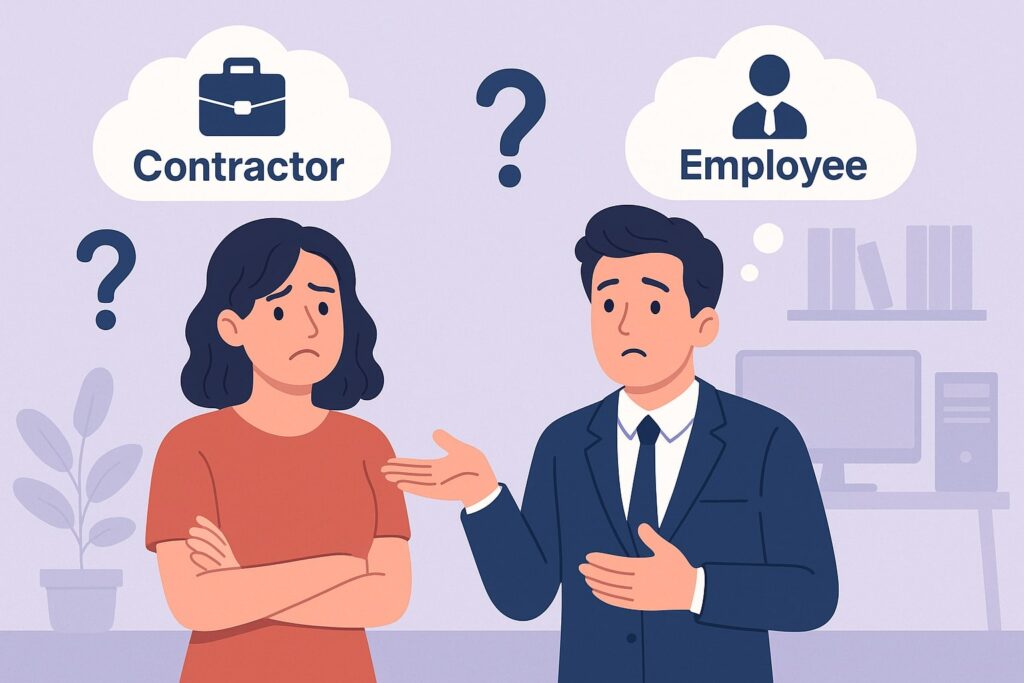
One of the first common mistakes new contractors make is not understanding the legal difference between being an independent contractor and being an employee. In the US, this isn’t just a label; it affects your taxes, benefits, and legal rights.
As a contractor, you’re typically responsible for paying your own self-employment taxes, securing your own health insurance, and setting aside money for retirement. You also don’t get overtime pay, unemployment benefits in most cases, or employer-sponsored benefits.
Many new contractors treat a long-term client like an employer but still call themselves “independent.” That can create misclassification issues that trigger IRS scrutiny or state labor investigations.
Agencies like the IRS and state labor departments look at factors like how much control the client has over your work, whether you use your own tools, whether you can work for multiple clients, and how you’re paid.
If you only work for one client, follow their schedule exactly, and use their tools, you may be functioning more like an employee.
To avoid this mistake, research the IRS guidelines on independent contractors, talk to a tax professional, and make sure your contracts clearly define your status as an independent contractor.
Over the next few years, classification rules may tighten as regulators focus more on gig work and contractor status in the US. New contractors should stay informed, because being misclassified can lead to back taxes, penalties, and legal headaches.
Failing to Use Written Contracts for Every Project
Another huge and very common mistake new contractors make is skipping written contracts. It’s tempting to say, “We trust each other; we’ll just work off email.” That can work when everything goes smoothly, but the moment there’s a disagreement about scope, deadlines, or payment, the lack of a clear contract becomes a serious problem.
A good contract protects both you and your client. It spells out the project scope, deliverables, timeline, payment terms, revision limits, ownership of work, confidentiality, and what happens if the project is cancelled.
Without it, you’re relying on memory or scattered messages. This is one of the most preventable mistakes new contractors make, yet it’s incredibly common.
To avoid this, create a simple contract template that you customize for each project. Many US contractors start with a basic service agreement created or reviewed by an attorney. Over time, you can refine it based on real situations you’ve faced, like scope creep or late payments.
In the future, more contractors will use digital contract tools with e-signatures and automated reminders. These tools help enforce terms, track approvals, and provide a clear audit trail. As a new contractor, getting comfortable with written agreements early is one of the smartest business decisions you can make.
Underpricing Services and Not Knowing Your Numbers
One of the most damaging common mistakes new contractors make is underpricing their services. Many new contractors simply take their old hourly wage as an employee, add a small bump, and call it a day.
But as a contractor in the US, you’re responsible for taxes, insurance, retirement, equipment, training, and unpaid administrative time.
If you charge too little, you’ll struggle to cover your costs and burn out quickly. Underpricing also sends a signal that your work is low-value, and it attracts clients who only care about the cheapest option. This leads to a cycle of overwork, low margins, and constant stress.
To avoid this mistake, you need to understand your numbers:
- Your minimum acceptable rate once you factor in taxes and expenses.
- Your billable vs. non-billable hours, because you can’t invoice for every minute you work.
- The market rates in your field and region, especially for specialized skills.
Instead of asking, “What will a client pay?” ask, “What do I need to charge to build a sustainable business?” Over the next few years, online rate calculators and industry data will make it easier to benchmark contractor rates, but you still need a clear grasp of your own costs and goals.
When you avoid underpricing, you position yourself as a professional, not a bargain. That single shift can completely change your contracting career.
Ignoring Taxes, Bookkeeping, and Financial Planning
A major common mistake new contractors make is treating taxes and bookkeeping as an afterthought. When your first checks start coming in, it’s tempting to focus on spending or reinvesting in tools, but remember: a big chunk of that money is not truly yours.
In the US, contractors must plan for federal income tax, state income tax (where applicable), and self-employment tax.
New contractors often forget to:
- Set aside money for quarterly estimated taxes.
- Track business expenses properly.
- Separate personal and business finances.
- Keep records of invoices, receipts, and payments.
When tax time comes, this can turn into panic, surprise bills, or penalties for underpayment. It’s one of the most stressful mistakes new contractors make, and it’s completely avoidable with a basic system.
To avoid this mistake, open a separate business bank account and run all project income and expenses through it. Use simple accounting software or apps to track invoices, categorize expenses, and generate basic reports.
Many US contractors also work with a CPA or enrolled agent, at least for their first year or two, to get set up correctly.
Looking ahead, financial tools for contractors will keep improving, with better integrations between banking, invoicing, and tax preparation. But the fundamentals won’t change: if you don’t track your money and plan for taxes, your contracting business won’t last.
Not Setting Clear Boundaries and Scope (Scope Creep)
Scope creep is one of the most frustrating common mistakes new contractors make. It happens when the project grows beyond the original agreement, but the price doesn’t. Suddenly, what was supposed to be a 20-hour job turns into 60 hours, with no additional pay.
New contractors are especially vulnerable because they want to keep clients happy, avoid conflict, and build a good reputation. They end up saying “yes” to every extra request — “just one more revision,” “quickly add this feature,” “jump on one more call” — without updating the contract or invoice.
To avoid this mistake, define the scope in writing before you begin:
- Spell out what is included (deliverables, features, number of revisions).
- Spell out what is not included or will cost extra.
- Include a process for change requests and additional work.
Then, when a client asks for more, you can respond professionally: “Happy to add that; here’s an updated estimate and timeline.” Over time, you’ll get more comfortable saying this, and clients who value your work will respect it.
In the coming years, more project management and proposal tools will help contractors specify scope clearly and track changes automatically. But even with better tools, you still need to protect your time and enforce your boundaries. That’s how you avoid being stuck in endless projects that never pay what they’re worth.
Poor Communication and Client Management
Another common mistake new contractors make is underestimating the importance of communication. You might deliver excellent work, but if clients feel ignored, confused, or surprised, they won’t come back. In many cases, clients care as much about the experience of working with you as they do about the final result.
Communication errors include:
- Not confirming expectations in writing.
- Failing to provide status updates.
- Going silent when there’s a delay or issue.
- Using vague language around timelines and responsibilities.
To avoid this mistake, build simple communication habits:
- Kick off every project with a clear summary of goals, scope, and schedule.
- Agree on preferred communication channels (email, project management tools, video calls).
- Set expectations for response times.
- Send brief progress updates at key milestones.
Good client management can turn one-off projects into long-term relationships, referrals, and retainer work. As remote work and distributed teams continue to grow in the US, contractors who communicate clearly and proactively will stand out even more.
Future tools — like AI-assisted project summaries and automated status updates — will help, but they won’t replace genuine professionalism and transparency.
Relying on One Client or One Income Stream
A dangerous and very common mistake new contractors make is relying on a single client for most of their income. It can feel comfortable when one company gives you steady work, but it’s risky. If their budget changes, leadership shifts, or the relationship ends, your income can drop to zero overnight.
New contractors sometimes fall into this trap because they land a great client early and stop marketing themselves. Months later, if that client cuts back, they have no pipeline and no visibility in the market. This instability can be financially and emotionally draining.
To avoid this mistake, think like a business owner:
- Aim to have multiple clients or at least multiple active leads.
- Keep networking and marketing even when you’re busy.
- Consider offering different types of services or packaged offers.
Over the next few years, more marketplaces, platforms, and remote job boards will give US contractors access to a global client base. But platforms can also be unstable, so you don’t want to depend on just one of those either. The contractors who thrive are the ones who diversify intelligently and always keep one eye on the future.
Neglecting Marketing, Branding, and Online Presence
Another big common mistake new contractors make is thinking that great work alone will bring in enough clients. Word-of-mouth is powerful, but in the US today, most clients will also look you up online — even if you were referred. If they see no website, no professional profile, and no portfolio, they may hesitate to hire you.
New contractors often overlook:
- A simple, professional website explaining who they serve and how.
- A portfolio of past work or case studies.
- A complete LinkedIn profile and relevant industry profiles.
- Consistent branding in how they describe their services.
You don’t need a complex brand or expensive logo to start. You just need clarity about what you do, who you help, and the problems you solve. Over time, you can add testimonials, before-and-after examples, and niche-specific content, like blog posts or short guides.
Looking to the future, contractors who combine strong skills with a clear digital presence will have a major advantage. More clients are searching online, reading reviews, and comparing providers across cities and states.
If you avoid the mistake of neglecting your brand and online presence, you’ll be far more discoverable and trustworthy in the eyes of potential clients.
Overworking and Ignoring Work–Life Balance
Many people become contractors for flexibility, then end up working more hours than they did as employees. One of the quiet but serious common mistakes new contractors make is failing to set boundaries around their time and energy.
They say yes to every project, respond to messages late at night, and never build systems that let them rest.
Over time, this leads to burnout, declining quality, health problems, and resentment toward your own business. You may start to dread client calls or feel trapped by your workload. This is the opposite of what most new contractors hoped for when they started.
To avoid this mistake, treat your time like a limited resource:
- Set working hours and stick to them as much as possible.
- Use tools to schedule meetings and block focus time.
- Build breaks, days off, and vacations into your calendar.
- Learn to say, “I’m booked this week, but I can start next week.”
Future trends point toward more awareness of mental health, flexible work, and sustainable careers. Contractors who build healthy habits now will be better positioned to succeed long-term. Avoiding overwork isn’t lazy — it’s a strategic way to protect your most important business asset: you.
Skipping Licenses, Insurance, and Legal Protections
Another critical common mistake new contractors make is overlooking legal and compliance requirements. Depending on your industry and state in the US, you may need specific licenses, permits, or certifications to operate legally. This is especially important in fields like construction, electrical work, plumbing, healthcare, and professional services.
New contractors sometimes assume that because they’re “small” or “just starting,” they don’t need to worry about legal formalities. But operating without proper licenses can lead to fines, loss of payment, and even being barred from certain types of projects. It’s not worth the risk.
Insurance is another area where new contractors cut corners. General liability insurance, professional liability (errors and omissions), and sometimes workers’ compensation are essential protections. Without them, one accident, mistake, or lawsuit could wipe out your savings.
To avoid this mistake, research your state and local requirements, and talk to an insurance broker who understands contractors in your industry.
Over the next few years, expect more digital platforms that help contractors manage compliance, store documents, and renew licenses automatically. But even with better tools, you’re responsible for making sure your business is properly protected.
Not Investing in Skills, Tools, and Continuous Learning
The market for contractors in the US is getting more competitive each year. One of the subtle but serious common mistakes new contractors make is assuming that the skills that got them their first clients will always be enough. Technology, regulations, and client expectations are constantly evolving.
If you don’t continue learning, you risk falling behind. This might look like using outdated software, ignoring new best practices, or being unaware of new regulations in your field. Over time, this can make your services less attractive and your work less efficient.
To avoid this mistake, commit to ongoing professional development:
- Take online courses or certifications relevant to your niche.
- Stay updated on industry news and trends.
- Invest in better tools that save time or improve quality.
- Learn basic business skills like negotiation, marketing, and pricing.
Looking ahead, AI, automation, and digital platforms will reshape many industries where contractors work. The contractors who thrive will be those who adapt early rather than resist change. If you avoid the mistake of stagnation and treat learning as part of your job, you’ll be far better positioned for the future.
Failing to Create Clear Systems and Processes
A very common mistake new contractors make is running everything out of their inbox and memory. At first, with one or two clients, this feels manageable. But as you grow, disorganized processes lead to missed deadlines, forgotten tasks, and a constant sense of chaos.
New contractors often don’t have systems for:
- Onboarding new clients.
- Collecting information and requirements.
- Sending proposals and contracts.
- Managing projects and deadlines.
- Invoicing and following up on payments.
Without simple systems, you’ll spend too much time reinventing the wheel and putting out fires. This makes it harder to scale and creates a stressful client experience.
To avoid this mistake, start with basic, repeatable processes:
- Use templates for proposals, contracts, and emails.
- Use a project management tool or task app to track deliverables.
- Have a consistent way to store files, documents, and notes.
In the coming years, more plug-and-play systems designed specifically for US contractors will make it even easier to streamline workflows. But even now, you can dramatically reduce stress by documenting your steps and using simple tools. That’s how you move from “freelancer who wings it” to “contractor who runs a real business.”
Overlooking Contracts Around Intellectual Property and Ownership

Another important common mistake new contractors make is not addressing intellectual property (IP) clearly in their contracts. Depending on your work — whether you’re designing, coding, writing, or building — questions can arise about who owns the final product and who can reuse it.
If your contract doesn’t spell this out, conflicts can occur later. For example, a client might assume they own exclusive rights to your work, while you assume you could reuse parts of it for future projects. Or a client might reuse your work in ways you never intended, without additional payment.
To avoid this mistake, include clear IP language in your agreements:
- Who owns the work before payment (usually you).
- Who owns the work after full payment (often the client).
- Whether you retain the right to display work in your portfolio.
- Whether the client has exclusive rights or limited usage rights.
As more work moves online and across borders, IP issues will become more visible and more important for contractors. Understanding and clearly documenting IP is a key step in protecting both your creative output and your revenue opportunities.
Not Asking for Deposits or Setting Payment Terms
A cash-flow related common mistake new contractors make is doing large amounts of work without any upfront payment. They trust that the client will pay at the end, only to face delays, partial payments, or even non-payment. This can be devastating, especially when you’re new and don’t have a financial cushion.
To avoid this, set clear payment terms from the start:
- Require a deposit (for example, 30–50%) before starting work.
- Use milestone payments for larger projects.
- Include due dates on invoices and late fees in your contract.
- Make it easy for clients to pay via multiple methods.
Deposits are standard practice for reputable contractors in many industries. They show that the client is serious and committed, and they give you some protection if the project is cancelled. Over time, this habit alone can dramatically reduce financial stress.
As online payments and instant transfers become more common in the US, it will be easier for contractors to enforce payment terms and manage cash flow. Avoiding the mistake of working without deposits is one of the simplest ways to keep your business stable.
Ignoring Reviews, Testimonials, and Reputation Management
In a digital world, reputation is everything. Another common mistake new contractors make is not actively collecting testimonials or paying attention to reviews. Many potential clients will search your name or business before hiring you. If they see no reviews — or only one negative review — they may move on.
To avoid this mistake, build reputation management into your process:
- Ask happy clients for short testimonials you can use on your website and profiles.
- Encourage reviews on relevant platforms for your industry.
- Respond professionally to criticism and use it to improve.
Over the next few years, more contracting and services marketplaces will rank providers based on verified reviews, repeat clients, and completion rates. New contractors who ignore their reputation will find it harder to compete.
On the other hand, if you avoid this mistake and build a strong record of satisfied clients, your reputation will become one of your biggest assets.
Future Trends New Contractors Should Prepare For
Beyond the everyday common mistakes new contractors make, it’s also important to think about the future. The contracting landscape in the US is evolving quickly, and being aware of trends can help you avoid long-term strategic mistakes.
Key trends include:
- More remote and hybrid work: Contractors can serve clients nationwide, but competition is also global.
- Increased regulation of independent work: Governments may adjust labor laws and tax rules for contractors and gig workers.
- Greater use of AI and automation: Routine tasks may be automated, but specialized and human-centered work will still be in demand.
- Growth of platforms and marketplaces: These can provide opportunities but also fees, rules, and dependence on algorithms.
New contractors who adapt early — by staying informed, building durable skills, and protecting their independence — will be better positioned than those who assume things will always work the way they do now.
FAQs
Q1. What are the biggest common mistakes new contractors make in their first year?
Answer: In their first year, the most common mistakes new contractors make include underpricing their services, failing to use written contracts, ignoring taxes and bookkeeping, and relying too heavily on one client for income.
Many also neglect marketing and don’t build a basic online presence, which makes it harder to attract new business. On top of that, new contractors often skip licenses or insurance, which leaves them exposed to legal and financial risks.
To avoid these mistakes, treat your work as a business from day one. Set up a separate bank account, track income and expenses, use simple contracts, and define clear payment terms.
Invest a bit of time in a professional website or profile and ask early clients for testimonials. If you focus on these fundamentals, you’ll reduce risk and increase your chances of building a stable contracting career.
Q2. How can new contractors avoid tax problems in the US?
Answer: A major common mistake new contractors make is waiting until tax time to think about taxes. To avoid problems, start by understanding that contractors in the US usually pay self-employment tax in addition to income tax.
You may need to make quarterly estimated tax payments to the IRS and, in some states, to state tax agencies.
Open a separate account where you routinely set aside a percentage of every payment for taxes — many contractors save 25–30% as a starting point, then refine that with guidance from a tax professional.
Use basic accounting software or apps to track income and categorize expenses, including equipment, software, home office, and travel. Working with a CPA or enrolled agent, at least in your first year, can help you avoid penalties and take advantage of deductions legally.
Avoiding tax-related mistakes is one of the most important parts of running a sustainable contracting business.
Q3. Do all new contractors need a formal contract, even for small jobs?
Answer: Yes, one of the most repeated common mistakes new contractors make is skipping contracts for “small” or “simple” jobs. Problems don’t only show up on large projects.
Even small jobs can lead to disagreements about what was included, how many revisions are reasonable, or when payment is due. A short, clear contract can prevent confusion and protect your time.
For smaller projects, you can use a streamlined agreement or even a detailed written proposal that the client signs. The key is to cover scope, deliverables, timelines, and payment terms. As you gain experience, you can create templates that make this process quick.
Having some form of written agreement for every project is a professional habit that separates successful contractors from those who constantly fight fires.
Q4. How can new contractors find clients without making common marketing mistakes?
Answer: When it comes to finding clients, a common mistake new contractors make is trying to do everything at once or relying only on job boards. Instead, start with a focused plan: define your niche, clarify who you serve, and build a simple message about the problems you solve.
Then choose a few channels where your ideal clients already spend time, such as LinkedIn, local business groups, industry forums, or specialized marketplaces.
Create a basic online presence: a one-page website or portfolio and a complete LinkedIn profile. Share useful content, show examples of your work, and ask past colleagues or early clients for referrals.
Over time, as you avoid scattered, inconsistent marketing efforts and instead follow a simple, consistent plan, you’ll build visibility and trust. This strategic approach helps you avoid many of the common marketing mistakes new contractors make.
Q5. What should new contractors do if they already made some of these mistakes?
Answer: If you’ve already made some of the common mistakes new contractors make, you’re not alone — almost every successful contractor has. The key is to address them quickly instead of ignoring them. Start by identifying your main problem areas: Are you underpricing? Are your finances disorganized? Do you lack contracts or proper licenses?
Then take practical steps to fix each issue one by one. You might raise your rates for new clients, implement a contract template, open a dedicated business bank account, or schedule a consultation with a tax professional or attorney.
It’s also helpful to review your client list, prioritize good relationships, and let go of arrangements that are draining or unprofitable. By treating past mistakes as learning opportunities and adjusting your systems, you’ll be much better prepared for long-term success.
Conclusion
The most common mistakes new contractors make are rarely about technical skill. Instead, they’re about business structure, money management, legal protections, communication, and long-term strategy. The good news is that every one of these mistakes can be avoided or corrected with awareness and action.
By understanding common mistakes new contractors make and how to avoid them, you give yourself a powerful advantage. You can price your services sustainably, protect yourself with strong contracts, stay compliant with US regulations, and build a professional brand that attracts the right clients.
You can also prepare for future trends — from evolving regulations to new technologies — instead of being caught off guard.
Contracting offers real freedom and opportunity, but success doesn’t happen by accident. If you commit to learning, improving your systems, and treating your work like a real business, you’ll be far ahead of most new contractors.
Start with one or two changes from this guide today, and keep stacking small improvements. That’s how you build a contracting career that is profitable, sustainable, and truly yours.